Thoughts, Articles, and Outlooks on the Industry

Automation

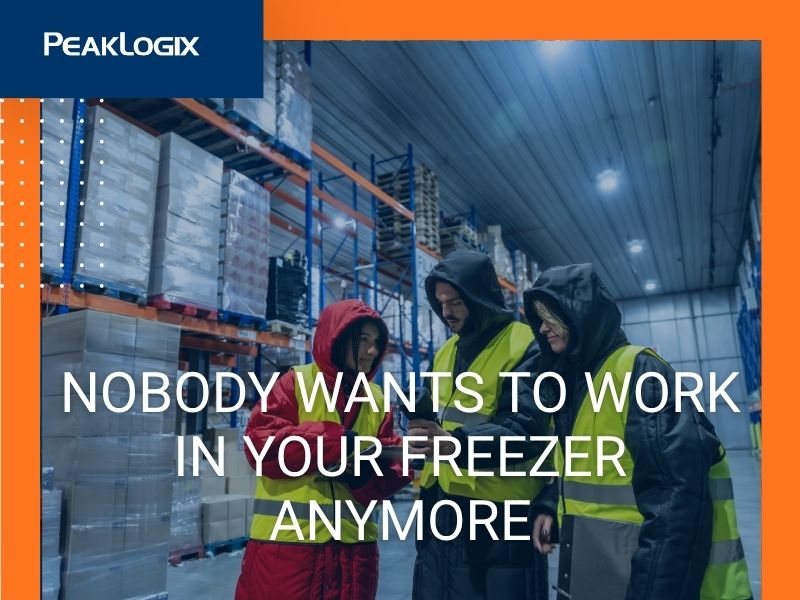
5 Things Every Food & Beverage Operator Should Know About the Freezer Labor Crisis

Freezer labor has become one of the most difficult challenges facing food and beverage operations today. For years, cold storage facilities relied on a steady workforce to move pallets, replenish inventory, and support production schedules. Today, many operators are facing a very different reality. Open positions remain unfilled for months. Turnover rates continue to climb. Existing employees are being asked…
June 11, 2026
Automation

How to Build the Business Case for Warehouse Automation

Key Takeaways •       Labor represents 50–70% of total warehouse operating costs — and wages grew 3.8% in 2025 alone, outpacing the national average. The cost of waiting to automate is rising every year. •       Most automation business cases fail at the CFO level because they only model labor savings. A complete ROI model includes…
June 9, 2026
Conveyors

Before You Buy a Robot, Fix Your Material Flow

Learn how operations teams identify material flow bottlenecks before investing in robotics Food and beverage companies are under pressure to move faster than ever. Production lines are becoming more efficient. Order volumes continue to rise. Customers expect shorter delivery windows and near perfect accuracy. As a result, many operations leaders immediately start exploring robotics as the answer. But here’s the…
May 28, 2026
warehouse automation

How to Pick the Right Partner for Your Warehouse Project

Six questions that separate the right partner from the wrong one — before you sign anything Talk to four equipment vendors and you’ll get four different answers. That’s not a coincidence — it’s the business model. Most vendors recommend the solution they sell. Not the one your operation actually needs. That’s why so many warehouse projects end up overbuilt, underperforming,…
May 5, 2026
sortation systems

Sortation Systems 101: Matching the Right Technology to Your Throughput

Key Takeaways Sortation systems automate the routing of items through a distribution or fulfillment facility — to packing stations, shipping doors, returns processing, or put-away locations. The five main sorter categories — sliding shoe, cross-belt, tilt-tray, pop-up wheel, and robotic — each serve different throughput ranges and product profiles. Choosing the wrong one is expensive to fix. Throughput requirements, product…
April 28, 2026
warehouse automation

The Integration Gap: Why Most Warehouse Automation Projects Underdeliver

Key Takeaways 76% of logistics transformation projects — including warehouse automation — fail to deliver expected results. The problem is rarely the technology. The integration gap is the space between a working point solution and a performing, coordinated system. Most vendors sell into that gap without bridging it. The four root causes of automation underperformance: wrong technology selection, poor systems…
April 20, 2026
goods to person

Goods-to-Person vs. Person-to-Goods: Which Fulfillment Model Is Right for Your Operation?

Key Takeaways Picking accounts for 55% of warehouse operating costs and up to 55% of a picker's time is spent traveling — not picking. Goods-to-person (GTP) systems eliminate most of that travel. GTP systems bring inventory to a stationary operator; person-to-goods (PTG) requires the operator to travel to the inventory. The choice between them drives nearly every other decision in…
April 13, 2026
AMR vs. AGVAS/RS

AMR vs. AGV vs. AS/RS: A Plain-Language Guide for Warehouse Decision Makers

Key Takeaways AMRs offer flexibility and fast deployment — ideal for operations with variable workflows or limited capital budgets. AGVs excel in fixed, high-volume, repetitive routes where predictability matters more than adaptability. AS/RS systems — including VLMs, carousels, and shuttle systems — deliver the highest storage density and retrieval speed for the right SKU profiles. Most mid-size operations don't need…
March 31, 2026
preventative maintenance

What Happens When Your Warehouse System Goes Down — And How to Make Sure It Doesn’t

Key Takeaways Unplanned warehouse downtime costs industrial operations $100,000 or more per hour — before emergency labor, SLA penalties, and cascading losses are factored in. Reactive maintenance (run-to-fail) costs up to 40% more than planned maintenance approaches over time, even when it appears cheaper upfront. The three maintenance approaches — reactive, preventive, and predictive — have very different risk/cost profiles.…
March 26, 2026
Automation

You Don’t Have to Automate Everything to Win Big

There’s a myth holding a lot of warehouse and distribution center operators back: the idea that automation is an all-or-nothing investment. That to justify the cost, you need to achieve lights-out, fully autonomous operations with zero humans on the floor. That you have to solve for every edge case, every exception, every SKU, before pulling the trigger. It’s simply not…
March 17, 2026