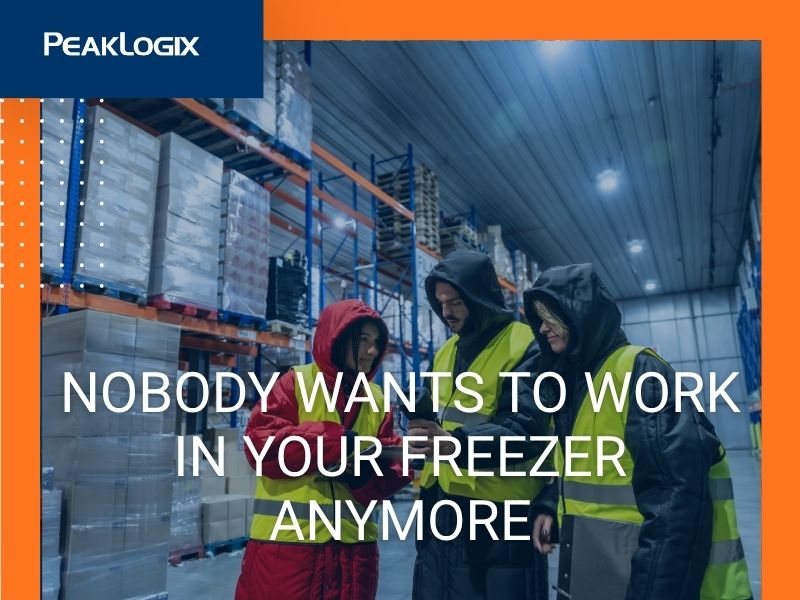
Freezer labor has become one of the most difficult challenges facing food and beverage operations today.
For years, cold storage facilities relied on a steady workforce to move pallets, replenish inventory, and support production schedules. Today, many operators are facing a very different reality. Open positions remain unfilled for months. Turnover rates continue to climb. Existing employees are being asked to do more with less.
The challenge is no longer finding ways to hire more people. The challenge is finding ways to operate successfully despite ongoing labor shortages.
As a result, many food and beverage companies are reevaluating how work gets done inside their cold storage environments. From warehouse automation solutions and material handling systems to software and workflow improvements, operators are looking for ways to reduce labor dependency while maintaining throughput.
Here are five important trends every food and beverage operator should understand about the freezer labor crisis.
1. The Labor Pool Continues to Shrink
Working in a freezer has always been demanding. Employees spend hours in cold environments while performing physically intensive tasks such as picking, pallet handling, replenishment, and forklift operation.
Today, fewer workers are choosing these types of roles.
At the same time, food and beverage companies continue to experience growing demand, increased SKU counts, and higher customer expectations. The result is a widening gap between labor availability and operational requirements.
For many organizations, traditional hiring strategies are producing fewer results each year. Even when positions are filled, maintaining staffing levels has become increasingly difficult.
This shift is forcing operators to explore long-term solutions that reduce dependence on manual labor rather than simply increasing recruiting efforts.
2. Rising Labor Costs Are Not Solving the Problem
Many companies have responded by increasing wages, offering incentives, and expanding recruiting programs.
While these initiatives can help attract candidates, they rarely solve the underlying challenge.
Facilities still face turnover, training costs, absenteeism, and productivity gaps created by constant workforce changes. Managers often find themselves spending more time hiring and onboarding than improving operations.
This is one reason many food and beverage companies are shifting their focus toward operational efficiency.
Rather than asking how to hire more workers, they are asking how to make existing teams more productive through better processes, improved material flow, and automation.
3. The Impact Goes Far Beyond Staffing
Labor shortages affect much more than headcount.
When freezer positions remain unfilled, product movement slows down throughout the operation. Forklift drivers spend more time traveling between storage locations. Replenishment delays impact production schedules. Shipping teams struggle to maintain throughput during peak periods.
These challenges create bottlenecks that ripple throughout the facility.
Many organizations discover that their labor problem is actually a material flow problem. Products are traveling farther than necessary. Operators are spending valuable time on transportation tasks instead of value-added work.
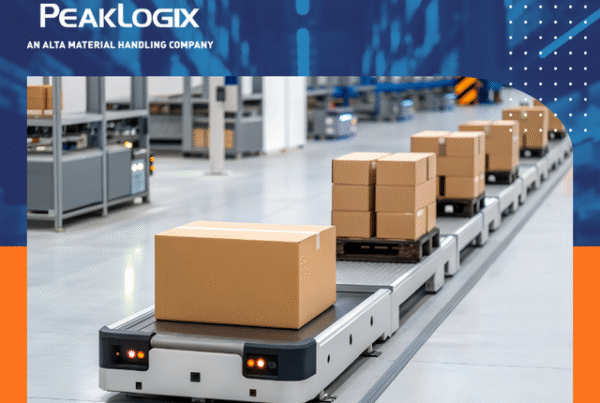
This is where conveyor systems, automated transport solutions, and optimized warehouse layouts can often provide immediate operational improvements. Improving flow throughout the facility allows organizations to move more product with fewer touches while reducing strain on existing labor resources.
4. Automation Is Becoming More Practical for Cold Storage Operations
Historically, many automation technologies struggled to perform reliably in freezer environments.
Today, that has changed.
Modern warehouse automation solutions are designed to operate in refrigerated and frozen environments while reducing the need for manual labor. Technologies such as robotic storage systems, autonomous mobile robots, automated stackers, and conveyor systems can help facilities maintain productivity despite ongoing workforce challenges.
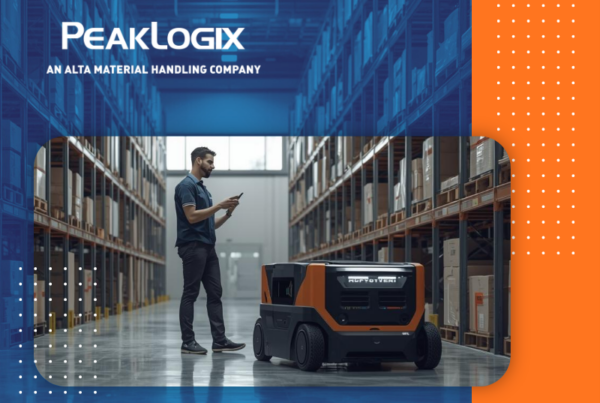
For example, robotic storage systems can eliminate much of the forklift travel traditionally required in cold storage operations. Autonomous vehicles can move product between work zones without requiring operators. Automated pallet handling systems can reduce repetitive lifting and transportation tasks.
The goal is not to replace people. The goal is to allow existing teams to focus on higher-value work while automation handles repetitive movement and storage activities.
5. The Most Successful Operators Are Redesigning Their Entire Workflow
The companies seeing the greatest success are not simply adding automation to existing processes.
They are taking a broader look at how materials move through the facility.
From receiving and storage to production support, packaging, and shipping, every step in the process affects labor requirements. Small inefficiencies add up quickly in freezer environments where labor is already difficult to find and retain.
This is why many food and beverage companies are investing in integrated solutions that combine robotic storage and retrieval systems, material handling equipment, warehouse software, and systems integration into a single coordinated operation.
By improving visibility and reducing unnecessary travel, these organizations can maintain throughput while requiring fewer labor-intensive tasks. The result is a more resilient operation that can continue to perform even when staffing challenges persist.
The Bottom Line
The freezer labor crisis is not a temporary challenge.
Labor shortages, rising costs, and workforce expectations continue to make cold storage staffing more difficult for food and beverage companies across North America.
The organizations that will thrive over the next decade are not waiting for the labor market to improve. They are finding ways to operate more efficiently with the workforce they already have.
Whether that means improving material flow, implementing automation, increasing storage density, or redesigning warehouse processes, the objective remains the same: maintaining operational performance while reducing labor dependency.
Successful operators are also investing in ongoing service and support programs to ensure their automation and material handling systems continue performing at peak efficiency for years to come.
If you’re evaluating ways to improve freezer operations, the first step is understanding where labor constraints are creating bottlenecks in your facility. The PeakLogix Warehouse Assessment can help identify opportunities to improve productivity, storage capacity, and material flow while supporting long-term growth.