food and beverage

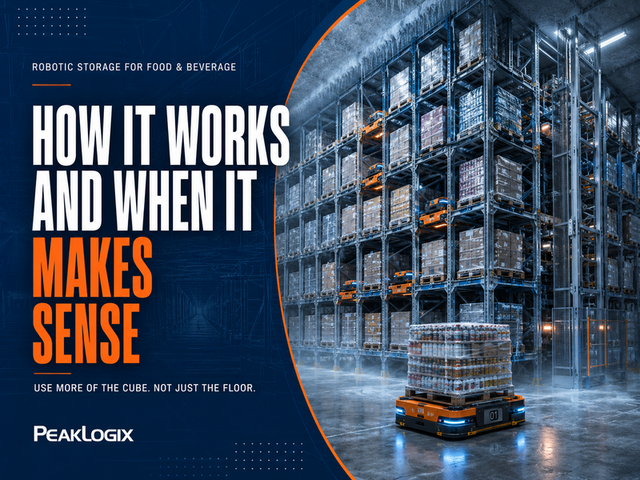
Robotic Storage for Food & Beverage: How It Works and When It Makes Sense

Cold storage space is expensive. So why dedicate so much of it to forklift aisles? For food and beverage manufacturers and distributors, every square foot of refrigerated or frozen warehouse space carries an ongoing cost. Yet conventional pallet storage requires aisles wide enough for forklifts to travel, turn, store, and retrieve loads. As inventory grows, that creates a difficult choice:…
racking

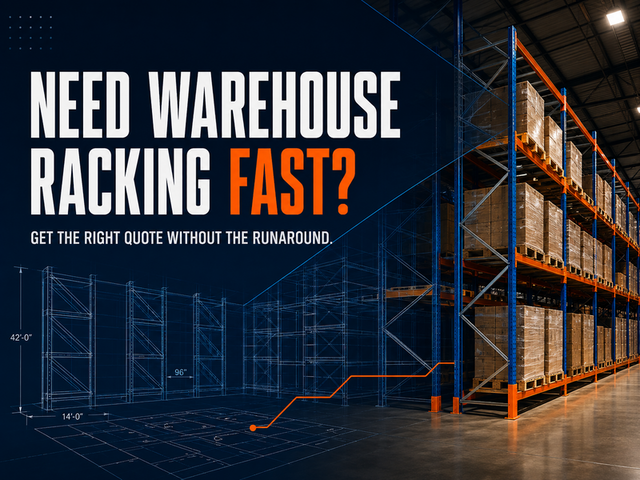
Need Warehouse Racking Fast? How to Get the Right Quote Without the Runaround

When your facility needs new warehouse racking, getting a price shouldn’t take weeks. Yet many companies discover that requesting a warehouse racking quote is more complicated than expected. One company designs the system. Another supplies the rack. Someone else handles installation. Before you have a complete number, you may be coordinating with multiple vendors, and the initial estimate may not…
racking

How Much Hidden Capacity Is Sitting Inside Your Warehouse?

When warehouse space starts becoming a problem, many operations leaders immediately assume they need more racking, more square footage, or even a larger building. But what if the space you need is already there? Across manufacturing, distribution, food and beverage, and wholesale operations, warehouses often have hidden capacity sitting in plain sight. Unused vertical space, inefficient layouts, damaged racking, and…
Automation

5 Things Every Food & Beverage Operator Should Know About the Freezer Labor Crisis

Freezer labor has become one of the most difficult challenges facing food and beverage operations today. For years, cold storage facilities relied on a steady workforce to move pallets, replenish inventory, and support production schedules. Today, many operators are facing a very different reality. Open positions remain unfilled for months. Turnover rates continue to climb. Existing employees are being asked…
Conveyors

Before You Buy a Robot, Fix Your Material Flow

Learn how operations teams identify material flow bottlenecks before investing in robotics Food and beverage companies are under pressure to move faster than ever. Production lines are becoming more efficient. Order volumes continue to rise. Customers expect shorter delivery windows and near perfect accuracy. As a result, many operations leaders immediately start exploring robotics as the answer. But here’s the…
warehouse automation

How to Pick the Right Partner for Your Warehouse Project

Six questions that separate the right partner from the wrong one — before you sign anything Talk to four equipment vendors and you’ll get four different answers. That’s not a coincidence — it’s the business model. Most vendors recommend the solution they sell. Not the one your operation actually needs. That’s why so many warehouse projects end up overbuilt, underperforming,…
sortation systems

Sortation Systems 101: Matching the Right Technology to Your Throughput

Key Takeaways Sortation systems automate the routing of items through a distribution or fulfillment facility — to packing stations, shipping doors, returns processing, or put-away locations. The five main sorter categories — sliding shoe, cross-belt, tilt-tray, pop-up wheel, and robotic — each serve different throughput ranges and product profiles. Choosing the wrong one is expensive to fix. Throughput requirements, product…
warehouse automation

The Integration Gap: Why Most Warehouse Automation Projects Underdeliver

Key Takeaways 76% of logistics transformation projects — including warehouse automation — fail to deliver expected results. The problem is rarely the technology. The integration gap is the space between a working point solution and a performing, coordinated system. Most vendors sell into that gap without bridging it. The four root causes of automation underperformance: wrong technology selection, poor systems…