There’s a myth holding a lot of warehouse and distribution center operators back: the idea that automation is an all-or-nothing investment. That to justify the cost, you need to achieve lights-out, fully autonomous operations with zero humans on the floor. That you have to solve for every edge case, every exception, every SKU, before pulling the trigger.
It’s simply not true. And that misconception is expensive.
At PeakLogix, we work with operations of all size, from regional distributors to national fulfillment networks, and time and again we see the same thing: the companies achieving the strongest ROI are not the ones who waited for a perfect solution. They’re the ones who moved forward when the system addressed 80% of their needs, captured the low-hanging fruit, and let the wins compound from there.
The Labor Math Is Working Against You
Let’s start with the numbers, because they don’t lie. The cost of warehouse labor is rising faster than most operations can absorb.
According to the U.S. Bureau of Labor Statistics, compensation costs for private industry workers rose 3.4% in the 12-month period ending December 2025, and that number has been climbing consistently for several years. In warehousing specifically, the pressure is even sharper: average hourly warehouse wages hit $16.95 in 2024, up 7.4% year-over-year from $15.78 in 2023. That’s more than double the overall rate of wage growth for the broader economy.
And wages are only part of the story. Personnel expenses already account for 45% of total warehouse operating costs when you factor in benefits, overtime, training, and turnover. With an industry-wide annual turnover rate near 43%, the hidden cost of constantly recruiting and onboarding new workers is a drain that never stops.
Looking ahead, the picture doesn’t get easier. Deloitte projects that 3.8 million new manufacturing and logistics jobs will be needed by 2033, with nearly half potentially going unfilled if current workforce trends continue. Declining immigration, an aging labor pool, and sustained competition for workers in tight regional markets are structural pressures, not temporary blips. According to the Council of Supply Chain Management Professionals, 73% of logistics companies already report experiencing labor shortages, with 58% saying it materially impacts their operations.
The question isn’t whether you can afford to automate. It’s whether you can afford to wait.
80% Is a Victory, Not a Compromise
Here’s what automation experts consistently recommend: if a system addresses 80% of your operational needs, move forward. Don’t let the 20% of edge cases, the unusual SKU, the seasonal exception, the complex return, paralyze you into inaction. That remaining 20% is exactly what a well-trained, properly supported human workforce is there to handle.
You are not trying to replace every person in your building. You are trying to make every person in your building significantly more productive, more consistent, and less reliant on a labor pool that gets harder and more expensive to fill every year.
When automation handles your highest-volume, most repetitive tasks, horizontal transport, sortation, zone-to-zone movement, routine picking paths, your human team is freed to manage exceptions, handle complex orders, oversee quality, and do the work that actually requires judgment. That’s not a compromise. That’s an optimized operation.
Start with the Low-Hanging Fruit
Every warehouse has processes that are ripe for automation right now. Before designing a full end-to-end solution, experienced integrators look for the high-frequency, high-labor, low-complexity tasks that deliver immediate and measurable returns. Consider what you’re doing manually today that fits this profile:
- Moving totes, pallets, or inventory between fixed points on a repetitive basis
- Transporting goods across large warehouse footprints multiple times per shift
- Picking in high-velocity zones where the SKU mix is consistent and predictable
- Sortation and consolidation for outbound shipping
- Replenishment of forward pick locations from reserve storage
These are the workflows where automation pays for itself fastest, often within 12 to 36 months. Identifying and prioritizing them is step one in any smart automation strategy.
AMRs Are Proven Technology, It’s Time to Use Them
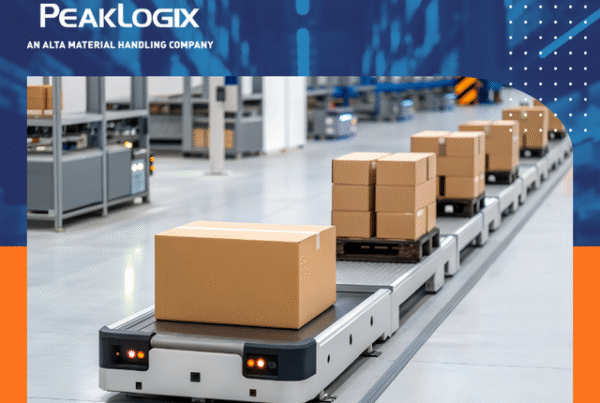
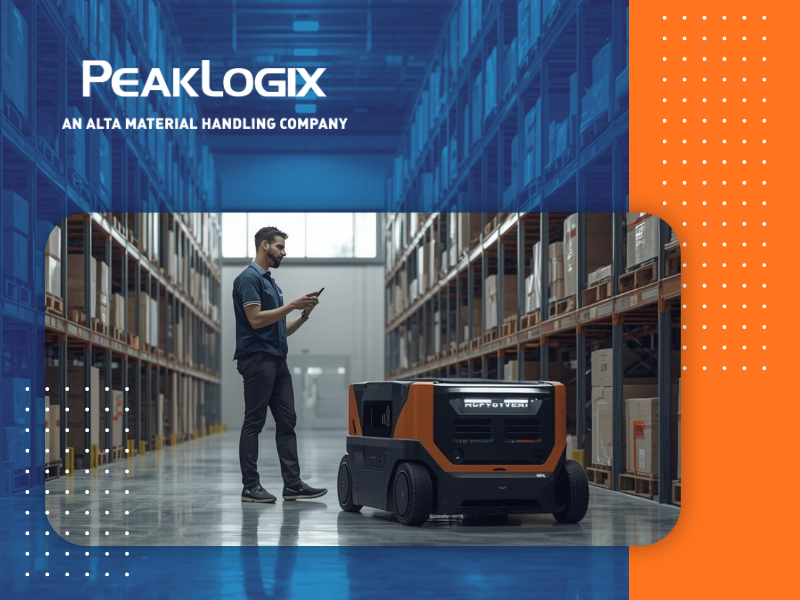
Autonomous Mobile Robots (AMRs) may still feel like a novelty to some, something you’d see in a tech demo or a documentary about Amazon. But in the real world of warehousing and distribution, AMRs are well-proven, widely deployed, and operationally mature technology.
Unlike older Automated Guided Vehicles (AGVs), AMRs navigate dynamically using onboard sensors and mapping software, no floor tape, no fixed rails, no expensive infrastructure changes required. They work alongside your existing team, adapt to changing floor layouts, and can be redeployed as your operational needs shift. They scale up during peak season and scale back when volume drops.
When AMRs make sense for your operation, and for many operations, they do, the ROI case is strong and the implementation risk is manageable. The question is not whether the technology is ready. It is. The question is whether your operation is ready to take advantage of it.
Automation Builds Scalability When Labor Can’t Keep Up
One of the most underappreciated benefits of warehouse automation isn’t cost reduction , it’s scalability. As your business grows, adds channels, or faces peak-season surges, an automated system scales in ways that a purely manual workforce simply cannot.
In a tight labor market, hiring 30% more people for Q4 is an increasingly unreliable strategy. Recruiting lead times are longer, training costs are higher, and turnover means your newest hires are often your least productive during your most critical weeks. Automation absorbs volume increases without a proportional increase in headcount, and without the recruitment scramble.
This scalability advantage compounds over time. Every year you delay is another year of operating at a structural disadvantage compared to competitors who have already made the investment.
The Next Step Doesn’t Have to Be the Final Step
You don’t need to design the perfect, fully automated warehouse today. You need to take the next step, the one that moves you forward, delivers measurable ROI, and positions you to scale further when you’re ready.
At PeakLogix, we specialize in designing practical, high-performance automation solutions that match where your operation is today, and where you need to be tomorrow. We don’t sell you lights-out automation for the sake of it. We help you find the 80% improvement, or more, that transforms your throughput, your cost structure, and your ability to grow.
Whether you’re evaluating your first AMR deployment, looking to add conveyor and sortation to an existing manual pick operation, or ready to design a full system upgrade, our team is ready to help you think it through.
The labor market isn’t getting easier. The ROI on smart automation isn’t getting smaller. The time to act is now.
Ready to find your 80%? Contact PeakLogix today to schedule a consultation and discover which automation solutions make sense for your operation.