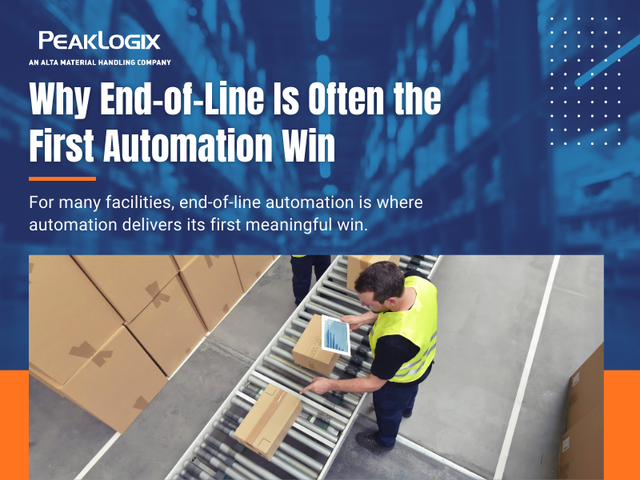
Warehouse automation conversations rarely start at the shipping dock, but many of the most successful ones end there.
As fulfillment, manufacturing, and distribution operations face mounting pressure from labor shortages, tighter delivery windows, and rising carrier compliance costs, automation has become less about experimentation and more about operational survival. While it’s tempting to focus automation investments upstream, many organizations discover that their biggest constraints, and fastest opportunities for improvement, live at the end of the line.
End-of-line automation doesn’t just improve shipping. It stabilizes the entire operation.
Defining End-of-Line Automation in Practice
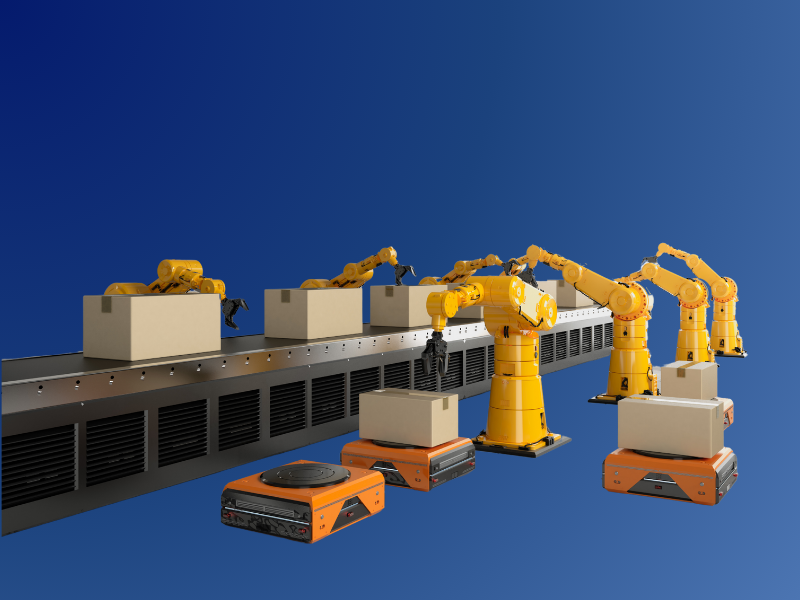
End-of-line automation encompasses the systems that manage products after picking or production and before outbound shipment. This final stretch of the operation often includes:
- Automated or semi-automated packing
- Print-and-apply labeling
- Inline weighing and dimensioning
- Sortation by carrier, route, or destination
- Robotic or conventional palletizing
These processes are repetitive, labor-intensive, and unforgiving when errors occur. Even small inefficiencies—mislabels, incorrect weights, late staging—can ripple outward, impacting customer satisfaction and transportation costs.
PeakLogix breaks these systems down in more detail in its overview of end-of-line automation solutions and how they fit into modern warehouse environments.
Why End-of-Line Is Often the First Point of Failure
End-of-line processes sit at the intersection of volume, variability, and time pressure.
As order profiles become more complex and throughput increases, packing and shipping teams are asked to do more with the same—or fewer—resources. Carrier cut-off times don’t move. Compliance requirements tighten. Labor availability fluctuates.
In many operations, upstream improvements like faster picking or increased production simply push congestion downstream. The result is familiar: backed-up packing stations, pallets staged in aisles, missed outbound windows, and rising chargebacks.
When everything else is working harder, the end of the line is often where things break first.
Why End-of-Line Automation Delivers Early, Measurable ROI
High impact on labor stability
Packing, labeling, and palletizing roles are among the hardest to staff and retain. Automating these functions reduces manual touches, improves consistency across shifts, and helps stabilize throughput even during labor shortages.
Lower disruption than upstream automation
Unlike large-scale AS/RS or goods-to-person projects, many end-of-line solutions can be layered into existing workflows. Technologies like modular conveyor systems, print-and-apply labeling, or inline dimensioning often require less facility reconfiguration—allowing teams to see results faster and with less risk.
Immediate visibility of results
End-of-line improvements are easy to measure and easy to defend internally:
- Increased pack and ship rates
- Fewer labeling and shipping errors
- Reduced carrier adjustments
- More predictable outbound flow
These gains directly affect customer experience and transportation spend, helping automation initiatives earn internal buy-in quickly.
Modular First, Integrated Over Time
A common misconception is that end-of-line automation must be deployed all at once. In reality, many successful projects begin with a modular approach.
Operations often start by automating a single constraint such as labeling accuracy, weighing compliance, or pallet build consistency, using solutions like automated palletizing systems. From there, systems are expanded and integrated as volumes grow and requirements evolve.
This phased strategy allows organizations to align capital investment with operational priorities while still planning for long-term scalability.
Avoiding the “Shifted Bottleneck” Trap
While end-of-line automation can deliver fast wins, it must be planned within the context of the full material flow.
Automating packing or palletizing without considering upstream release rates or downstream carrier capacity can simply move the bottleneck instead of eliminating it. Successful projects take a systems-level view—ensuring end-of-line improvements are synchronized with upstream processes and outbound constraints.
PeakLogix explores this broader perspective in its work connecting fulfillment automation across the supply chain, including how end-of-line systems interact with upstream picking, storage, and software platforms like warehouse control and management systems.
When End-of-Line Automation Is the Right Place to Start
End-of-line automation is often the right first step when operations are experiencing:
- Labor challenges in packing or shipping
- Frequent mislabels or compliance errors
- Missed carrier cut-off times
- Dock congestion and staging overflow
- Growth that manual processes can no longer absorb
Stabilizing the final handoff to the customer often unlocks improvements across the rest of the operation.
A Strategic Starting Point—Not Just a Technology Upgrade
At PeakLogix, end-of-line automation works best when it’s treated as a business decision—not just a technology purchase. The goal is to align throughput targets, labor strategy, and long-term flexibility into a system that supports growth without over-automation.
This March, PeakLogix will explore these concepts further in an upcoming webinar on end-of-line automation, diving deeper into where teams should start, how to evaluate ROI, and how to avoid common pitfalls that limit performance.
For many operations, the path to smarter automation doesn’t start at the front of the warehouse—it starts at the end, where accuracy, speed, and customer expectations converge.